Posts

All You Need to Know About Kubernetes Multi-Cluster Management
Image
The journey of cloud computing came with the arrival of the virtual machine (VM). The cloud-native application takes a service-oriented approach, where applications are composed of independently operated services. In addition, stability and high availability are some of its fundamental features. To know the amazing highlights of  Kubernetes multi-cluster management , take a deep sneak at these points given below: In Kubernetes, a multiple-cluster deployment acts as a bride to coordinate master nodes, known as federation. The Kubernetes cluster consists of a master node and a series of worker nodes that contains resources and Kubernetes elements to orchestrate container deployment. In addition, each cluster possesses its specific mission and manages its deployment. Kubernetes multi-cluster management  is a great way to deploy and run applications on a large pool of resources.  With its easy-to-use UI and out-of-the-box capabil...

Enjoy the Flexibility to Install Kubernetes Cluster with Ease

Image
Kubermatic offers the revolutionary platform that provides Kubernetes cluster the flexibility to run containerized applications across multiple virtual, physical, cloud-based, and on-premises environments.  A production Kubernetes cluster environment has more requirements than personal learning, development, or test environment Kubernetes. The Kubermatic Kubernetes Platform works and delivers excellent outcomes to developer teams for running Kubernetes cluster operations conveniently on multi-cloud without any hassle. Consider how your requirements for a Kubernetes cluster are influenced by the following issues: · Availability · Scale · Security and access management Kubernetes is ideally suited to manage complex deployments not only by providing flexible primitives but also because of its extendibility. Kubermatic Kubernetes Platform is a great way to extend the Kubernetes API with resources you want to automate in your clusters. Many global industry leaders work with Kubermatic ...

3 Effective Benefits of Introducing Kubernetes Cluster Architecture

Image
 Whether it is about creating Kubernetes cluster architecture or deploying it the Kubernetes kubermatic platform offers an organization a consistent way to examine the infrastructure, process, or work in the organization. Kubernetes Kubermatic is an excellent platform that manages Kubernetes clusters wherever you deploy them.  Here are the benefits of deploying work in the organization:  1. Intuitive workload management  By deploying Kubernetes, the DevOps team can effectively manage workloads using the native Kubernetes system. Not only this, you can export configuration files and troubleshoot existing deployment effectively.  2. Global application catalog KKP provides users to get a visual way to configure the applications in a reliable way and upgrade them in future versions. So, handle the work wisely with the help of Kubernetes and achieve the desired results.  3. Scale of edge clusters  Organizations can use KKP to speed up the expedition toward...

Simplify multi-clusters in Kubernetes with Kubermatic Platform

Image
Today, it is prevalent for businesses to operate and manage multiple Kubernetes clusters and cloud-native operations across different cloud providers or infrastructures. However, as each Kubernetes cluster is a nearly self-contained unit, the upstream community tries to research and develop Kubernetes multi-cluster management solutions. That said, Kubernetes Cluster may be a possible way, among others. The most frequent use cases of multi-cluster management involve development and production isolation, service traffic load balancing, decoupling of data processing and data storage, cross-cloud backup and disaster recovery, manageable allocation of computing resources, and low latency access cross-region services, and vendor lock-in avoidance. Kubermatic is developed to address multi-cluster and multi-cloud management challenges, including the situations mentioned above. It offers users a centralized control plane to distribute applications and their models to multiple clusters from th...

Benefits of adopting Cloud Native Design in the Enterprises

Image
The main purpose of the cloud-native design operations is designed to leverage effectively unlimited horizontal scaling with rapid change as key. By installing the operations, you can focus on the real-time and dynamic automation of physical systems.  Importance of the Cloud-Native Design With the Cloud-Native Design cloud capabilities of auto-scaling, auto-provision, and auto redundancy capabilities, you can speed up innovation, improve agility, and reduce IT costs. In addition, it helps in moving a business idea into production faster for a better agility process.  Three essential aspects of adopting cloud-native operations 1. Shift approach at any time Many enterprises take existing workloads and migrate them to the cloud. When you shift the legacy practices to the cloud might shift as faster as you need.  2. Visibility across the multi-cloud platform  Deploy the application in two or more cloud providers, where the services are used across the multi-cloud platfor...

Five Benefits in the Enterprises by Opting Edge Computing Solution

Image
 Edge computing is basically based on certain data that needs fast processing. Therefore, it should be processed closest to its generation point. The Kubernetes edge computing introduced this model was only essential to transmit the cloud. Before embracing the edge computing solutions , it is necessary to have deep knowledge about the Kubernetes premises in the enterprises. Here are the few benefits an edge computing provides:  1. Cost-effective Data processing solution Edge computing lowers the IoT cost by locally performing via data computing. Enterprises can decide which services to run locally and which will reside in the cloud.  2. Faster response times If you choose the Kubernetes cloud in the enterprises, it is reduced by cutting out round trips to the cloud. As a result, you will get faster responses and ensures critical operations function smoothly without breaking down. 3. Security and compliance Edge computing solution mainly reduces or avoid general data trans...

Get the Best Assistance on Multi Kubernetes Cluster Management

Image
 It becomes quite easier to handle different containers and run applications with full scalability using Kubernetes. It provides developer teams with a framework to run distributed systems with flexibility. Kubernetes multi-cluster architecture helps in service discovery and load balancing and helps in automated rollouts and rollbacks of container requests. Kubermatic offers an agnostic platform that helps deploy clusters with a consistent experience across your preferred infrastructure stack. It offers the flexibility to eliminate vendor lock-in and dynamically move workloads of applications based on your requirements.  Moreover, Kubermatic offers the best assistance on multi Kubernetes cluster management as you can run and deploy applications on-premises and in the cloud without any restrictions. It helps run both cloud-native operations and legacy applications with centralized governance, control, and security. KKP is certified by the CNCF and is enterprise-proven. It is a ...

The Significance of Kubernetes Operator Development in an Organization

Image
Operators are widely used in the Kubernetes environment as they are software extensions that make use of custom resources to manage applications and their components.  Kubernetes Operator Development follows various Kubernetes principles and has great importance as you can use an operator to automate a lot of things such as: • Taking backups of application's state and restoring them • Handling upgrades of the application code • Publishing a Service to applications  • Simulating failure in all or part of your cluster • Choosing a leader for a distributed application  • Deploying an application on demand  • Publishing service to applications that don’t support Kubernetes API to discover them Kubermatic Kubernetes Platform for Kubernetes Operator Development Designed to automate IT operations from the infrastructure to the application, Kubermatic Kubernetes Platform provides DevOps teams with an intuitive self-service portal that works across any infrastructure.  R...

Scale Up the Scenario in the Enterprise with Kubernetes Services

Image
There are many things your organization will adopt by choosing Kubernetes services for the enterprise. First, it offers one of the best ways to deploy and run applications on a large pool of resources.  Here are the benefits of deploying Kubernetes within an enterprise:  1. Market leader  More developers and engineers know the benefit of deploying the Kubernetes management platform , which lowers the learning curve for businesses that adopt it. In addition, Kubernetes has a large ecosystem, and that makes it easy to extend the functionality. 2. Proven and battle-tested  Thousands of IT teams are using Kubernetes daily. In addition, this makes it a proven reliable solution that can reduce cloud complexity. 3. Open-source  To many businesses, this open-source strategy makes the Kubernetes preferable to orchestrators that are closed source that is built. These are closely associated with only one company. 4. Increase the developer productivity  Kubernetes give...

Three Benefits of Elevating Multi-Cluster Kubernetes

Image
 To improve the performance of the work in the organization, you have to adopt the multi-Kubernetes cluster  organization. There are various ways to segment workloads from each other in Kubernetes.  Here are the three benefits of Kubernetes in the organization:  1. Performance  With the help of Kubernetes, if you run more than one cluster, it may improve your ability to scale up workloads when essential in the organization. 2. Flexibility  You can choose the different versions of Kubernetes of each cluster and if you have an application that depends on the certain setup. You can easily control the things in the organization, which will make the application faster.  3. Security and compliance  The multi-cloud Kubernetes also offers some security and compliance benefits to the developers. For example, strict isolation between workloads mitigates the risk that a security issue in one pod could escalate impact on others.  Conclusion  The Kub...

The Purpose of The Cloud-Native Applications in the Organization

Image
With the times, you must rebuild your applications by using Kubernetes clouds. Moreover, with the proliferation of open source and cloud technologies, hybrid and multi-cloud are becoming the norm. There are many benefits of embracing cloud-native designs in the organization. It helps us to deliver the work faster ad make the system smoother. Here are the benefits of cloud-native applications: 1. Faster release space  The cloud technology will build automation and make the network loads faster and more predictable. Now it is time to market the innovative technology and lag the competition. 2. Superior customer experience   The cloud-native applications allow to improve the customer experience and make the system more agile for the startups. Therefore, organizations focus on liberating enterprise data by engaging customer and employee experiences. 3. Ease of management  Cloud-native gave the option to make infrastructure management effortless. You can run difficult functio...

Why Organizations Need Multi-Cloud Kubernetes Solutions?

Image
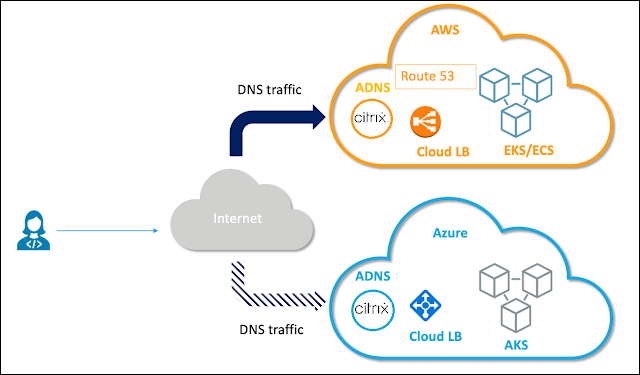
Did you know 84% enterprises works on multi-cloud and more than half of them use both public and private clouds? The reasons for using a multi-cloud management solution are very compelling as it allows development teams to manage multiple clouds from a single interface and support kubernetes and other cloud platforms. The best thing is multi-cloud management straggles seek to simplify and streamline multiple clouds by delivering a centralized management platform that integrates with other tools. Following are the benefits of incorporating multi-cloud kubernetes in  your organization: Reduced strain on IT teams Visibility Security Cost management Increased availability Hybrid and Multi-cloud Kubernetes help development teams automate a large number of Kubernetes clusters across any multi-cloud environment without any hassle. The Kubermatic Kubernetes Platform provides you the ease of standardized cluster installations, centralized compliance, full life cycle management, and busines...

Scale DevOps Kubernetes Adoption and Lower Maintenance Cost

Image
Kubermatic Kubernetes Platform accelerates the adoption of high-value technologies that makes it easy to deliver complaint applications to any platform. Using  DevOps Kubernetes ,  your team builds compact, immutable, and hardened images that can be deployed on-premises, in the cloud, or whatever platform comes next. In addition, it helps enterprises ensure any initial savings gained from the implementation of new technology are not overshadowed by higher operational overhead and compliance remediation costs in the future.  The potential of Kubernetes Depends on the Quality of Containers it Manages Container solutions have provided businesses with the means to deliver the application in an immutable, lightweight, and portable way. It allows the creation of highly efficient, distributed architectures for their environment. However, Kubernetes has improved how organizations schedule and orchestrate containers, but it doesn't address creation and maintenance. It includes:...

Kubernetes Operator Development for Better Usability

Image
Kubernetes operator extends Kubernetes API to manage to maintain third-party software as native Kubernetes objects. Many operators are being built for platform elements like databases, loggers, queues, etc. You can see a number of fit-for-purpose application platforms being created by composing multiple operators together. So, here are the guidelines for Kubernetes operator development.  1 . Design Your Operator with Declarative API : A declarative API allows you to declare or specify the required state of your custom resource. You should prefer a declarative state over any imperative action in the custom resource spec type definition. Therefore, the custom controller code should be written to reconcile the current state with the required state. 2 . Use Kubectl as A Primary Interaction Mechanism : When designing your operator, you should support most of its action through Kubectl. In addition, Kubernetes contain various mechanisms such as custom resource definition, custom sub-reso...

An Overview of Clustering in the Cloud

Image
Kubernetes clusters have seen solid growth in adoption in the last decade. Tech giants and startups alike are leveraging cluster-based architectures to deploy and manage their applications in the cloud. So, what is a cluster and  cluster installation ? And why do you want to consider using a cluster to host your own application?    What is a cluster? A computer cluster is a group of two or more nodes that run in parallel to achieve a common goal. It allows workloads consisting of a high number of individual, parallelizable tasks to be distributed among the nodes in the cluster. Consequently, these tasks can leverage each computer's combined memory and processing power to boost the overall performance.  Clusters in the cloud Before the public cloud, a computer cluster consisted of physical machines communicating through a local area network. Building a computer cluster involves thoughtful planning to ensure it meets present and future requirements. In additi...

Lesser-Known Benefits of Kubernetes Hybrid Cloud

Image
  Nowadays, hybrid clouds are integral parts of organizations. Kubernetes and containers are becoming a more popular way of developing cloud-native applications for the modern IT landscape. But not all organizations are completely behind the technology. Understanding some lesser-known benefits of the  Kubernetes hybrid cloud  will help businesses to maximize their infrastructure choices.                       1. Using hybrid cloud and Kubernetes doesn't mean businesses should take a cobbled-together strategy When considering hybrid cloud, many people think they can choose which pieces of cloud provider's offering they use. The concept is that the different types of cloud offer different strengths. For example, it is great to leverage on-premise instances for data that requires stronger security measures. This approach allows businesses to leverage a hybrid cloud...

Why should You Migrate to Cloud-Native design?

Image
  Developing an application is a challenging process. The architecture and engineering choices need careful planning to ensure performance, security, and a great user experience. But the big fat question is, should you migrate your on-premises applications to the cloud or opt for a  cloud-native design.   Cloud adoption transfers the technology and support of the underlying infrastructure from the IT team to the cloud provider.  A cloud approach offers many benefits, including more database options and integrations with other services. But before you decide to migrate your on-premise apps, consider the following things: Consider database needs : The most important component for most applications is the database. The monolithic application design was the favored choice in an enterprise landscape for years. However, it is complex and has the benefits of first-in, first-out data processing simplicity. On-demand resources:  with a monolithic de...

Importance of Kubernetes multi-cluster management

Image
  Businesses are increasingly deploying multiple Kubernetes clusters to enhance availability, flexibility, isolation, and scalability. Multi-cluster is a method for deploying an application across multiple Kubernetes clusters to improve availability.  Kubernetes multi-cluster management   can be implemented to ensure compliance with distinct and conflicting regulations. The speed and security of software delivery can also be improved. Individual development teams deploy applications to isolate clusters and specifically expose which services are available for testing and release.    Better operational readiness:  troubleshooting, associated operational runbook, and tools are simplified with standardizing cluster creation. It alleviates common sources of operational errors while reducing the cognitive load for support engineers, which leads to improved response time.    No vendor lock-ins:  a multi-cluster strat...

How is Kubernetes changing the DevOps space?

Image
  Kubernetes has seen drastic growth over the past few years and businesses are leveraging containers for complex applications, micro-services, and cloud-native applications. With the rampant growth of  standardized Kubernetes ,  DevOps has gained more traction. While they appear very different, one is a tool and the other is the methodology; they work collectively to help businesses deliver fast services.    The Kubernetes DevOps connection Kubernetes helps the team respond to customers' demands without having to stress about the infrastructure layer. The orchestration engine within Kubernetes handles the once manual task of deploying, scaling, and creating more resiliency based on metrics. Kubernetes is crucial for DevOps teams looking to scale, automate and build resiliency in their applications while reducing infrastructure burden.    Deploy everywhere:  Kubernetes has the ability to deploy an application everywhere witho...

What You Should Know About Cloud-Native Applications

Image
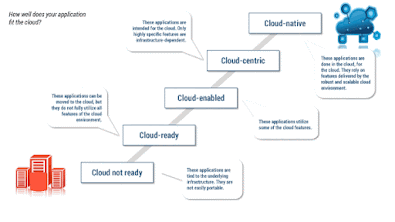
Cloud-native applications are apps that make complete use of the cloud computing revolution. To take full advantage of  Cloud-native operations , one needs to ensure that the application design is decoupled from physical infrastructure. Moreover, the application should be divided into services and tiers. Each service and tier should be developed & run independently. Here are the main features that define Cloud-Native Applications. Multiple services:  each application can further be split down into services called Microservices. These services co-operate with each other. However, it appears to the end customer that they are reaching a single application. Elasticity:  the applications and their services should scale in-out and up-down in case the demand increases.  Compatibility:  each service is programmed in a way that other applications can consume it. It is generally done via APIs that have well-defined behavior....